
POST-INFLAMMATORY PIGMENTATION
When inflammation leaves a memory
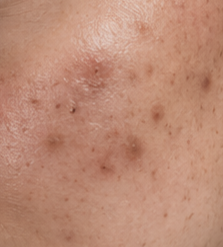
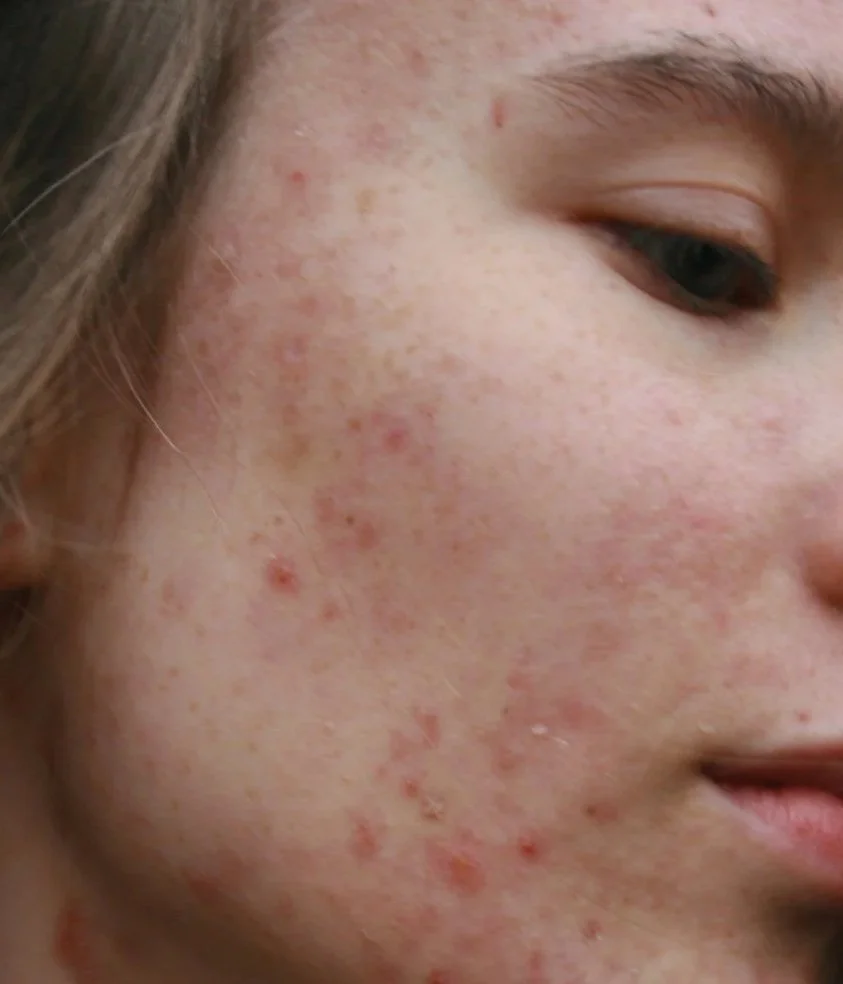
Have you ever had a breakout disappear, only to be left with a brown/red or pink mark that seems to stay long after the blemish is gone?
That's often post-inflammatory hyperpigmentation, or PIH.
The original inflammation may be gone, but the skin can be left with a pigment response that takes much longer to resolve.
What's happening in the skin?
When skin becomes inflamed or injured, signalling molecules released during the inflammatory response can stimulate melanocytes.
These cells respond by producing more melanin.
The pigment can then be transferred into surrounding keratinocytes, and in some cases pigment can move deeper into the dermis, where it can be much more persistent.
This is why picking, squeezing, over-exfoliating or repeatedly irritating the skin can sometimes create another pigment problem while trying to solve the first one.
What can trigger PIH?
PIH can follow almost any inflammatory or traumatic event, including:
Acne and breakouts
Eczema or dermatitis
Picking or squeezing
Burns
Insect bites
Cosmetic procedures
Over-exfoliation
Skin irritation
Injury
Certain inflammatory skin conditions
It can occur in every skin tone but tends to be more pronounced and longer lasting in darker skin types.
How we approach
PIH at
Delilah Mae
First, we address why the skin became inflamed.
Because if inflammation continues, the skin can continue receiving the signals that encourage pigment production.
Our approach focuses on:
Calm the inflammation → Strengthen the skin → Regulate pigment → Encourage renewal → Protect the result
We may incorporate progressive resurfacing, pigment-regulating ingredients, barrier support and carefully selected treatments depending on your skin's condition.
And importantly, we don't believe stronger always means better.
In pigmentation management, creating too much inflammation can potentially create more pigment. This is particularly important when treating skin of colour.