
SUN SPOTS & SOLAR LENTIGINES
The visible history of sun exposure
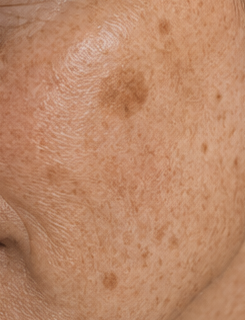
Those defined brown spots that gradually appear across the face, hands, décolletage and other sun-exposed areas are often solar lentigines.
You may know them as:
sun spots, age spots or liver spots.
Unlike freckles, solar lentigines tend to remain visible throughout the year.
What's happening in the skin?
Years of UV exposure can alter the way pigment is produced and retained within the epidermis.
Solar lentigines are associated with increased melanin and changes within the epidermis, along with signs of chronic sun damage.
This is why we often describe them as the visible history of cumulative UV exposure.
What contributes to them?
Cumulative UV exposure
Repeated sunburn
Outdoor lifestyle
Tanning beds
Ageing skin
Genetic susceptibility
How we approach solar pigmentation at Delilah Mae
This type of pigmentation can often respond well to targeted correction because it tends to be more localised and superficial than some other pigmentary conditions.
Our approach may include carefully selected resurfacing treatments, pigment-regulating skincare and treatments designed to encourage healthy renewal.
But correction is only one part of the equation.
If we remove the visible pigment but don't change the environment that created it, we're simply inviting it back.
That means daily SPF 50+, UV protection and consistent home care are fundamental to maintaining your results.